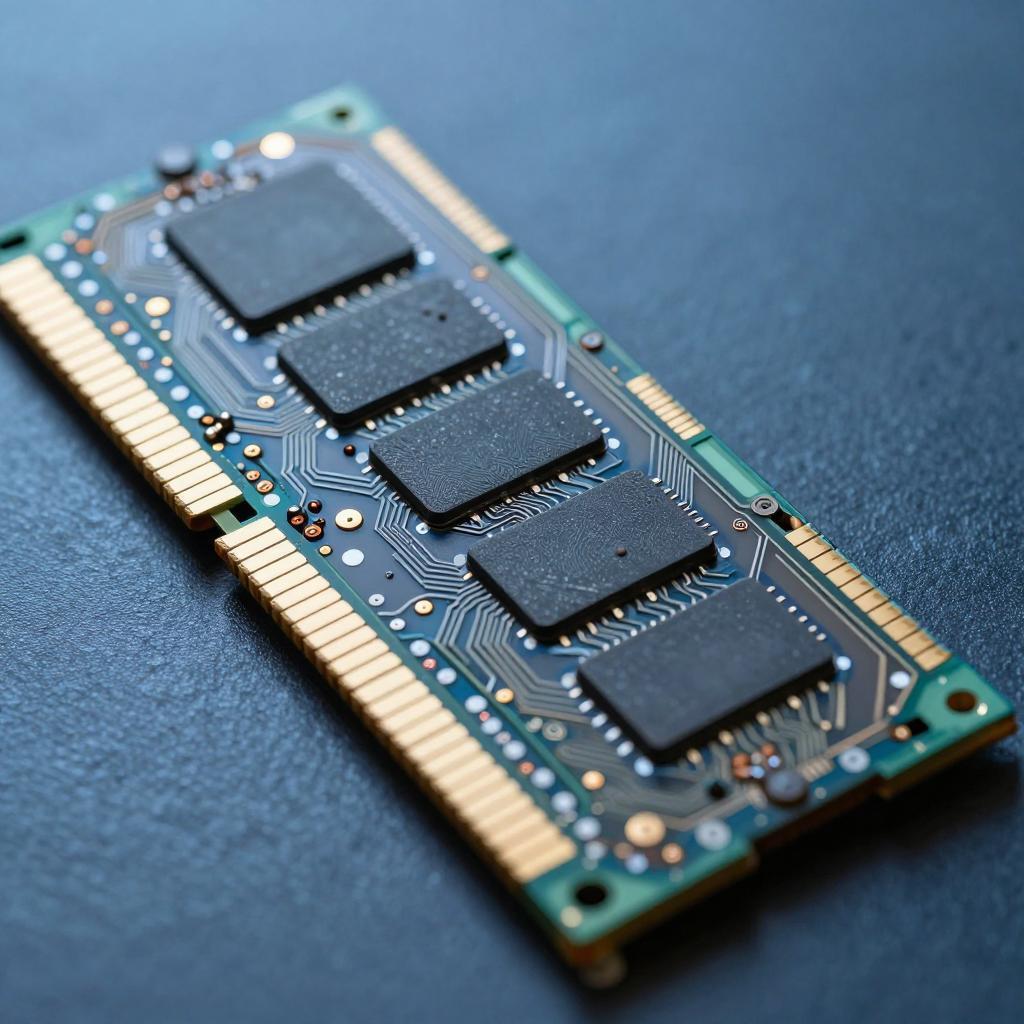
RAM Memory Modules Supplier
  • Yangtze Memory Technologies Co., Ltd. (YMTC) saw its revenue surge by 445% year-on-year in the first quarter.
    June 05, 2026 Yangtze Memory Technologies Co., Ltd. (YMTC) saw its revenue surge by 445% year-on-year in the first quarter.
    Yangtze Memory Technologies Co., Ltd. (YMTC) saw its revenue surge by 445% year-on-year in the first quarter.   The global NAND flash memory market is experiencing an unprecedented boom, and Yangtze Memory Technologies (YMTC) is reaping the biggest benefits. According to a recent Counterpoint report, the global NAND flash memory market size in the first quarter of this year increased 3.5 times year-on-year, reaching $46 billion. This surge is driven by the massive deployment of AI infrastructure. Servers need to store weights and training data, and the NAND usage per AI server is several times that of a regular server. YMTC's revenue in the first quarter surged 445% year-on-year, and its global NAND flash memory market share rose to 13%.   1. Phase I production capacity is nearing its limit.   2. Phase II achieved full production capacity in just two years.   3. Phase III wafer fab construction will begin in Wuhan in the second half of this year.   4. New production lines are producing next-generation high-stack-number flash memory products. At the current pace of expansion, total output this year is expected to surpass SK Hynix and Micron, with its overall scale second only to Samsung and Kioxia.   Over the past six months, driven by the demand for AI computing power, Samsung, SK Hynix, and Micron have all shifted their production capacity towards high-margin HBM and enterprise-grade SSDs, continuously compressing consumer-grade flash memory capacity. As a result, storage chip prices for mobile phones and PCs have risen steadily, with some DDR5 and enterprise-grade NAND contract prices increasing by over 50% in a single quarter. The supply side is limited; AI applications are prioritized, followed by enterprise-grade applications, naturally leaving limited space for consumer-grade devices.   For users planning to upgrade their SSDs or integrate with new platforms, storage prices are unlikely to ease in the short term. However, from another perspective, Yangtze Memory Technologies Co., Ltd. (YMTC) is one of the few players in the domestic supply chain capable of "reverse-increase" production during a price-increase cycle.
    View More
  • How is the ram memory trend in second half of year? Did Samsung strike really affect the Chinese market?
    May 29, 2026 How is the ram memory trend in second half of year? Did Samsung strike really affect the Chinese market?
    How is the ram memory trend in second half of year? Did Samsung strike really affect the Chinese market?   Hello, friends. Welcome to Temo Blog. This is Winnie.  The most significant market disruption in recent times stems from the strike by the Samsung Electronics labor union. On evening of 20th. May,The Samsung Electronics labor union has announced the suspension of the 18-day general strike originally scheduled to begin on May 21, and will instead hold a vote on a preliminary wage agreement between May 22 and May 27. Market sentiment was notably boosted by progress in labor negotiations at Samsung Electronics; during intraday trading, Samsung Electronics shares surged over 6%, while SK Hynix also rose by approximately 8%. At the same time, affected by this news, ram memory in China market also price raise in recent two weeks. As matters currently stand, the impact of this event on the market appears to be primarily psychological rather than affecting actual supply. In the short term, expectations of a strike at Samsung, production controls by original manufacturers, and inventory stocking ahead of the peak season will continue to underpin market prices. However, from a medium-to-long-term perspective, the strength of the recovery in end-market demand, the pace of production expansion by domestic manufacturers, and whether AI-driven demand can be consistently realized will ultimately determine the duration and price ceiling of the next memory cycle. But in terms of products, we think prices for both DDR4 and DDR5 continue to rise. Overall, while the pace of price increases may slow in the second half of the year, a strong market cycle is expected to persist through 2026 and 2027.   Best regards,   Winnie        
    View More
  • AI Computing Power
    May 22, 2026 AI Computing Power "Eats" Memory: DRAM Prices Soar Over 60%, Domestic Chips Break Through Against the Trend May 18, 2026
    AI Computing Power "Eats" Memory: DRAM Prices Soar Over 60%, Domestic Chips Break Through Against the Trend May 18, 2026 A "supercycle" driven by artificial intelligence (AI) is propelling the global memory industry to unprecedented heights. In the second quarter of 2026, contract prices for mainstream memory products generally surged by 60% to 70%, with some server and mobile memory chips even recording quarterly increases exceeding 150%. While Samsung, SK Hynix, and Micron are shifting over 80% of their production capacity to high-profit AI-specific memory, downstream mobile phone and PC industries are experiencing an unprecedented cost storm. Meanwhile, Changxin Memory, a leading domestic memory manufacturer, delivered an "explosive" performance, successfully becoming the fourth largest player in the global DRAM market. According to the latest data released by TrendForce, in the second quarter of 2026, DRAM (Dynamic Random Access Memory) contract prices surged by 58%-63% quarter-on-quarter, while NAND Flash (flash memory) prices rose even more dramatically by 70%-75%. This marks the second consecutive quarter of significantly higher-than-expected price jumps. The price increases for specific product categories are even more astonishing. 64GB DDR5 memory for AI servers saw a 150% increase in a single quarter, 12GB LPDDR5X memory rose by 130%, and some high-specification products even reached 300%. Meanwhile, traditional LPDDR4X contract prices also surged by 70%-75%. Analysts point out that the current price increases and speed of memory have exceeded the industry peak of 2017-2018, a phenomenon rarely seen in the past decade. “The fundamental reason is simple: AI is consuming all available capacity,” said an analyst at ICwise Research. Samsung, SK Hynix, and Micron collectively control over 90% of the global memory market. In pursuit of the ultra-high profit margins of HBM (High Bandwidth Memory) and enterprise-grade SSDs, they have shifted over 80% of their new and adjustable capacity to these AI-related products. The HBM capacity gap remains as high as 50%-60%, severely squeezing general-purpose DRAM capacity. One HBM chip consumes the equivalent of 3-4 standard DDR5 chips, and this supply-side distortion is transmitted throughout the entire market. The price surge in memory costs is being borne by end consumers and system integrators. Driven by AI, the arms race among the three major memory manufacturers has intensified. Samsung plans to extend its HBM technology to mobile devices, increasing bandwidth in phones and tablets by 30%, and will provide samples of its next-generation CXL 3.1 memory modules to customers in the third quarter. Simultaneously, Samsung has officially discontinued its LPDDR4/4X product line, focusing entirely on the high-profit AI sector. SK Hynix, leveraging its deep partnership with Nvidia, sold nearly $5.2 billion worth of products to Nvidia in the first quarter, a 62.6% year-on-year increase. The company's market ...
    View More

  • Memory and SSD: 2026 Latest Developments
    May 11, 2026 Memory and SSD: 2026 Latest Developments
    Memory and SSD: 2026 Latest Developments ‌一、Memory Technology: HBM Dominates the AI Era, DDR6 Enters Sampling Phase‌ · High Bandwidth Memory (HBM) Emerges as the Core of AI Computing Power‌: SK Hynix has globally debuted HBM4 (featuring a 12-layer stack with a single-stack capacity of up to 48GB) and has entered the mass production phase. While HBM3E is set to become the mainstream standard in 2025, HBM4 is expected to see accelerated adoption across NVIDIA, AMD, and domestic AI chips in 2026. Thanks to its bandwidth exceeding 1TB/s and low power consumption, HBM has emerged as the sole choice for training large-scale AI models, accounting for over 70% of global DRAM production capacity.。 · Consumer Memory: DDR5 Achieves Widespread Adoption: DDR5-8000 has emerged as the absolute mainstream standard in the global consumer market, with DDR5-8000 products from Samsung, SK Hynix, and Micron now fully rolled out. · DDR6 Enters Preliminary R&D Phase: JEDEC has yet to release the final DDR6 standard, as disagreements persist regarding key parameters—specifically voltage, pin layout, and sub-channel architecture. Although Samsung and SK Hynix have already initiated sample validation, deployment in 2028 is expected to be limited exclusively to server platforms; consumer-grade motherboards (such as AMD AM6 and Intel LGA1851) are unlikely to offer support until 2030. · Production capacity and supply remain tight.‌: In Q2 2026, global contract prices for general-purpose DRAM are projected to rise by 58%–63% quarter-on-quarter, primarily because AI servers are prioritizing and absorbing production capacity for HBM and high-density DDR5. Micron has completely exited the consumer-grade DRAM business; the global consumer market is now dominated by Samsung (38%), SK Hynix (25%), and CXMT (18%), with Chinese brands collectively holding a global market share of less than 20%. ‌二、SSD Technology: PCIe Gen6 + CXL Reshapes Storage Architecture‌ · ‌PCIe Gen6 SSD Commercial Launch‌: InnoGrit and Pengtai Storage are set to launch the world's first PCIe Gen6 AI SSDs in Q1 2026, featuring sequential read speeds of up to 28 GB/s, 512B random read performance exceeding 50M IOPS, and latency as low as 2.8 μs—specifically optimized for AI inference KV caching.。 · ‌The CXL Protocol Emerges as a Key Interface‌: Enterprise-grade SSDs have begun to support CXL 3.0, enabling pooled memory sharing with CPUs and GPUs and breaking through traditional NVMe bottlenecks. NVIDIA’s BlueField-4 platform has integrated SSDs into the GPU’s context caching hierarchy, thereby transforming the SSD from a mere "storage device" into an "AI data scheduling node." · ‌QLC and PLC NAND: Enterprise-Dominant, Consumer-Constrained‌: Enterprise-grade QLC SSDs have surpassed the 200TB capacity mark per drive, serving the AI "warm data" tier; meanwhile, PLC NAND has not yet achieved large-scale commercial adoption due to limitations in lifespan and cost, leaving TL...
    View More
  • Premium Memory, SSD, Motherboard & Graphics Card Global Supply
    May 06, 2026 Premium Memory, SSD, Motherboard & Graphics Card Global Supply
    Premium Memory, SSD, Motherboard & Graphics Card Global Supply   Date: April 30, 2026   Driven by the booming AI industry, the global PC hardware market is facing tight supply and continuous price increases in 2026. DRAM memory, NAND flash for SSDs and mainstream graphics cards are in short supply worldwide, with prices keeping rising due to strong demand from AI data centers and limited consumer-grade component output.   We specialize in wholesale memory modules, SSDs, motherboards and graphics cards, serving global distributors, retailers and system integrators. We maintain stable inventory and sufficient spot stock amid the market shortage, offering full-range mainstream and high-performance PC hardware covering office, gaming and AI computing scenarios.   With strict quality control, competitive pricing and standard export services, we help global clients stabilize their procurement cost and supply chain amid the market volatility.   We sincerely welcome global buyers for wholesale inquiry, bulk order placement and long-term strategic partnership. Contact our sales team for the latest product catalog and real-time quotation.
    View More
  • Buyers of solid-state drives (SSDs) have noticed an interesting trend: the price of SSDs using domestically produced NAND flash memory is gradually decreasing, while Samsung and Kioxia drives are stil
    May 06, 2026 Buyers of solid-state drives (SSDs) have noticed an interesting trend: the price of SSDs using domestically produced NAND flash memory is gradually decreasing, while Samsung and Kioxia drives are stil
    Buyers of solid-state drives (SSDs) have noticed an interesting trend: the price of SSDs using domestically produced NAND flash memory is gradually decreasing, while Samsung and Kioxia drives are still increasing in price. This price fluctuation is rewriting the rules of the game for domestic storage manufacturers.   1. With its new architecture, Yangtze Memory Technologies (YMTC) has begun mass production of 294-layer 3D NAND flash memory, achieving a storage density of 20Gb/mm², read/write speeds exceeding 7000MB/s, and a yield rate exceeding 90%. Its performance is comparable to mainstream international products.   2. Chips with over 300 layers are planned for release in the second half of 2026. The stacking height is rapidly approaching that of Samsung and SK Hynix, narrowing the technological gap from over a year to within six months.   3. With production capacity doubling and market share surging towards the top three globally, Yangtze Memory Technologies (YMTC) has achieved technological breakthroughs and its production capacity has been steadily increasing. In the first quarter of 2026, YMTC's revenue exceeded 20 billion yuan, doubling its previous figure. Its global market share of flash memory chips has surpassed 10%, very close to the top three globally. To further expand its operations, YMTC, in addition to completing a new factory this year, has planned to build two more. Once all three new factories are operational, total production capacity will more than double.   4. According to data from some institutions, in the third quarter of 2025, YMTC's global shipment share exceeded 13%, firmly closing in on Micron. Once the third phase of its factory is completed, annual production will increase from 1.77 million wafers to approximately 2 million wafers, giving it a strong chance of surpassing Micron and SK Hynix to become the world's third-largest flash memory supplier.   5. The underlying reason is actually the sharp rise in chip prices. The purchase price of the memory used in the iPhone 17 Pro jumped from around $25 in early 2025 to over $70, an increase of more than 180%, while the price of domestically produced chips was 15% to 20% lower.   6. The current chip market is very segmented. High-end chips needed for AI servers are still experiencing skyrocketing prices, but the prices of everyday consumer products have decreased due to increased domestic production capacity and some retailers clearing out inventory. Domestic chips are mainly focused on the consumer market, and lower prices will subsequently lead to price reductions in other models. My advice for buying things is quite straightforward: if you happen to need a hard drive, consider domestically produced chips; their price-performance ratio is usually more than 15% higher than foreign brands.   7. From 64 layers to 294 layers, from less than 1% of the global market share to over 13%, from being restricted to entering Apple's supply chain, ...
    View More
  • Global Customers Gather in Hong Kong: Global HighTech cordially invites you to the Global Sources Consumer Electronics Show
    April 10, 2026 Global Customers Gather in Hong Kong: Global HighTech cordially invites you to the Global Sources Consumer Electronics Show
    Global Customers Gather in Hong Kong: Global HighTech cordially invites you to the Global Sources Consumer Electronics Show Hong Kong – April 2026 – Global HighTech Technology Company Limited, a leading global electronics manufacturer, officially announces its participation in the Global Sources Consumer Electronics Show, held from April 11th to 14th, 2026 at AsiaWorld-Expo in Hong Kong. We cordially invite partners, buyers, and industry colleagues from around the world to visit our booth 8L01 to explore cutting-edge technologies and business opportunities. As a seasoned company with over 20 years of professional manufacturing experience, Global HighTech is committed to providing global customers with high-quality, innovative consumer electronics products and solutions. This exhibition will showcase the company's latest R&D achievements and core product lines, covering a wide range of products including RAM, SSDs, graphics cards, and motherboards. A company representative stated, “We are very much looking forward to meeting new and old friends at AsiaWorld-Expo. For the past two decades, Global HighTech has earned the trust of customers from the US, Europe, Southeast Asia, and other markets thanks to its solid manufacturing capabilities and rigorous quality control. This exhibition is not only a platform to showcase our technological strength, but also a valuable opportunity to deepen international cooperation and explore new markets.” Exhibition Information: · Exhibition Name: Global Sources Consumer Electronics Show · Dates: April 11 (Saturday) – April 14 (Tuesday), 2026 · Location: AsiaWorld-Expo, Hong Kong · Booth Number: 8L01 About Global HighTech Technology Company Limited Global HighTech is headquartered in Shenzhen, China, with an office in Walnut, California, USA. The company focuses on the research, development, production, and sales of consumer electronics, providing one-stop OEM/ODM services to global distributors, brand owners, and retailers based on the core principles of “professionalism, innovation, and reliability.” Advance booking is welcome. For one-on-one meetings during the exhibition, please contact: jw3@pcjoinwin.com • US Office: 377 S Lemon Ave STE B Walnut, CA 91789, United States • Shenzhen Office: Room 1004, 10th Floor, Building T2, Lijingcheng Center, Longhua District, Shenzhen, Guangdong Province • Visit us directly at booth 8L01 at the exhibition. About Global Sources Consumer Electronics Show: Global Sources Consumer Electronics Show is one of the world's largest and most influential consumer electronics sourcing events, attracting tens of thousands of professional buyers and suppliers from around the world each year. It is a core platform for industry trend releases and business matchmaking.
    View More
  • Major Turnaround in the Memory Module Market in 2026: Technological Iteration and Domestic Rise Reshape Industry Pattern
    April 08, 2026 Major Turnaround in the Memory Module Market in 2026: Technological Iteration and Domestic Rise Reshape Industry Pattern
    Major Turnaround in the Memory Module Market in 2026: Technological Iteration and Domestic Rise Reshape Industry Pattern    Since March 2026, the global memory module market has ended irrational fluctuations and entered a rational development stage, with mainstream models gradually returning to reasonable pricing. The release of Google's TurboQuant AI memory compression algorithm, capacity adjustment of international giants and the rise of domestic manufacturers have jointly driven market transformation.   I. Market Return: Rational Pricing Brings Benefits to Consumers   From the end of 2024 to the end of 2025, consumer-grade DRAM prices remained high, suppressing consumer demand. After March 2026, global DRAM prices returned to a reasonable range, channel inventory returned to normal, and mainstream memory models at home and abroad had affordable pricing and sufficient supply, driving the recovery of the DIY PC market.   II. Behind the Transformation: Multiple Factors Achieve Supply-Demand Balance   The rational market transformation stems from the resonance of multiple factors, with the core being the rebalancing of supply and demand. On the supply side, international storage giants diverted capacity back to consumer-grade DRAM, and domestic CXMT's second-phase project was mass-produced, with its market share rising to 14%, breaking the price monopoly. On the demand side, previous high prices suppressed consumption, and Google's TurboQuant algorithm rationalized market sentiment. On the channel side, the burst of inventory bubble promoted sound market development.   III. Technological Iteration: DDR6 Popularization and AI Reshaping Demand Logic   In 2026, DDR6 gradually became the mainstream with a penetration rate exceeding 90%, showing significant improvements in performance and power consumption compared to DDR5. Both international giants and domestic manufacturers accelerated their layout. Google's TurboQuant algorithm greatly improved memory utilization efficiency, driving AI memory demand from "quantity-driven" to "efficiency-driven", and technological innovation became the core of competition.   IV. Industry Pattern: Domestic Rise Enters a New Competition Stage   Previously, the global memory market was monopolized by three international giants. In 2026, domestic manufacturers rose, with CXMT becoming the world's fourth-largest DRAM manufacturer, and Yangtze Memory Technologies accelerating its efforts to break the monopoly. International giants focused on the high-end market, forming a new pattern of "high-end dominance and mid-to-low-end competition".   V. Future Outlook: Stable Pricing and Long-Term Positive Industry Trends   Industry expectations indicate that memory pricing will remain moderately stable in the second half of 2026, with the supply-demand balance continuing. In the long run, emerging technologies such as AI and cloud computing will drive the growth of memory ...
    View More
1 2 3 4

A total of 4 pages

click here to leave a message

Leave A Message
If you are interested in our products and want to know more details,please leave a message here,we will reply you as soon as we can.

Home

Products

about

contact